Work as an Ayahuasca Facilitator in Europe
We run small, trauma-informed plant medicine retreats in Portugal — usually six guests, never more than ten, always with more facilitators than most centres would consider reasonable. We are looking for a few people to join us, retreat by retreat.
If you have been wondering how to work as an ayahuasca facilitator in Europe without compromising on safety, ethics, or depth — and without pretending to be a shaman — this page is for you.
Apply to work with us
Small retreats, serious preparation, honest integration
Vine of the Soul Retreats has hosted more than 850 guests across Portugal, Spain, and the Netherlands. Our flagship home is in the Algarve, and our ceremonies take place in the late afternoon — structured, carefully paced work in daylight, not all-night endurance. We work with ayahuasca, psilocybin, and related medicines inside a structured, trauma-informed framework — the BioPsyche Renewal Protocol™ — that moves from stabilisation through the ceremonial work into embodied integration.
In practice, that means we usually begin in the language of psychology: nervous systems, parts, patterns, attachment. As a retreat unfolds and people meet experiences that psychology alone cannot hold, we move with them into philosophical and spiritual territory — not to convert anyone to a worldview, but to help them make a mystical experience practical. If you need every guest to adopt your cosmology, we are not your retreat. If you can meet an atheist engineer and a lifelong meditator with the same respect, read on.
Three paths into this work
People come to facilitation from very different directions. We welcome all three of these — and we will train you into our methodology either way.
Experienced medicine facilitators
You have already held space in ceremony — including the sessions that ask everything of you. We welcome facilitators with hands-on experience in any of:
- Ayahuasca
- Psilocybin / mushroom ceremonies
- San Pedro / Huachuma
- DMT / Bufo
- Kambo
Therapists, coaches & somatic practitioners
You hold space professionally, even if you have never worked in ceremony. Relevant backgrounds include:
- Psychotherapy or counselling
- Coaching with real depth work
- Breathwork facilitation
- EMDR and trauma modalities
- Somatic and body-based practice
Medical professionals
Nurses, physician associates, paramedics, physicians. In our experience this is the most underrated background in psychedelic work — and one of the most valuable. If you can read a person's state at a glance, stay calm when others escalate, and have worked night shifts, you already have half the skill set.
Work as a psychedelic-assisted therapist — without leaving your profession behind
Many clinicians assume the only route into this field is a multi-year retraining or a research trial. There is another way: working alongside experienced facilitators in a small retreat setting, where your existing skills — screening, medication awareness, de-escalation, clinical observation, the ability to stay grounded while someone else falls apart — are immediately useful from the first ceremony.
You do not arrive as a student. You arrive as a professional whose competence we depend on, learning the ceremonial and integration side of the work in exchange. For nurses and physician associates in particular, the overlap is larger than you might expect: a ceremony is, in its own way, a long and demanding shift — and the steadiness you bring to it, especially when a guest moves through fear or confusion, is something no amount of spiritual training can substitute.
Because we collaborate retreat by retreat, you can keep your practice, your licence, and your life — and still do this work several times a year in the Algarve.
What facilitator work actually involves
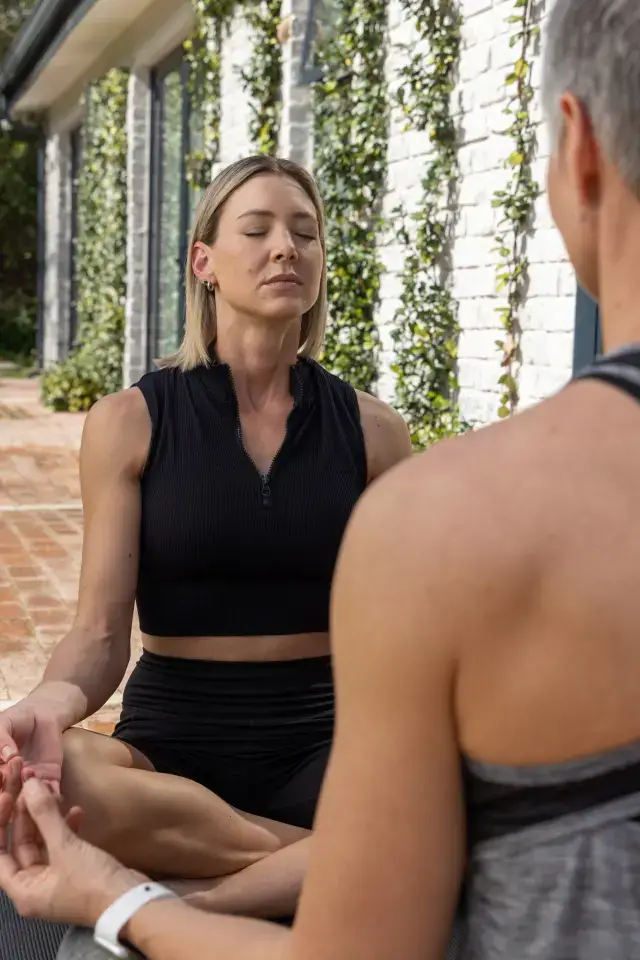
Retreat work is not a stage. It is service — and on a small property with a small group, everyone serves. Here is the honest version of the job:
- Ceremony support. You assist guests through deep emotional and somatic processes during our late-afternoon ceremonies — present, attentive, unhurried, for as long as the process takes. That includes the more turbulent passages — fear, confusion, resistance — that strong ayahuasca work sometimes brings, and which ask for a facilitator who does not lose their own ground.
- Sharing circles. You help hold the circle: listening, reflecting, knowing when to speak and — more importantly — when not to.
- Preparation and integration calls. Depending on your background, you may conduct introductory calls before a retreat and integration calls afterwards.
- Kitchen and household. You help in the kitchen, and with cleaning when needed. On our retreats, the person who held you through ceremony may hand you your soup the next day. We consider that a feature, not a flaw.
- Learning our way of working. You bring your own depth, and you adapt to the Vine of the Soul methodology — our structure, our safety protocols, our arc from psychological language to spiritual integration.
The non-negotiables: genuine people skills, your own ongoing inner work (you cannot take guests where you have not been willing to go yourself), the capacity to remain steady when a guest's experience becomes frightening or disorienting, and a non-dogmatic approach. Everything else can be learned.
Music, bodywork, and what you carry with you
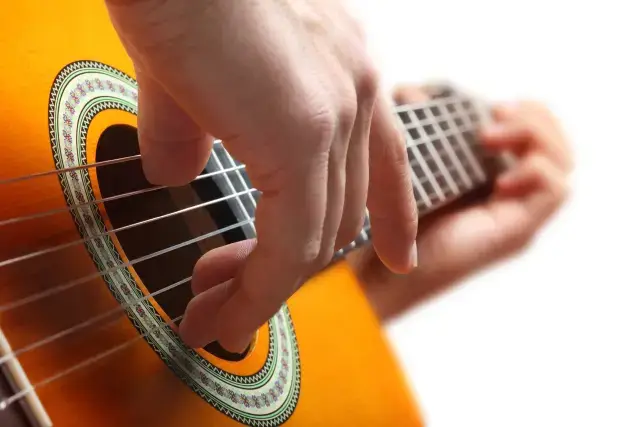
If you play an instrument or sing, tell us. Live music shapes the field of a ceremony in ways recordings never quite reach, and musical facilitators are a genuine asset on our team. It is not a requirement — but it is noticed, and welcomed.
The same goes for complementary skills. If you have a non-competing practice — massage, bodywork, or similar — you are welcome to offer your services to our guests during retreats and keep 80% of that revenue. We would rather our guests receive excellent bodywork from someone we trust than have you leave half your craft at the door.
Become an ayahuasca facilitator the way it should be done
There is no shortage of online courses promising to make you a psychedelic facilitator in a weekend. We don't believe in that route. The way to become an ayahuasca facilitator — one who can actually be trusted with another person's most vulnerable hours — is to apprentice inside real retreats, with experienced people, with real guests, over time.
That is what working with us offers. You start where your existing skills already serve: a therapist begins with circles and integration calls, a nurse begins with screening and ceremony support, a musician begins with the soundscape. Over successive retreats, your role deepens. We collaborate on a retreat-by-retreat basis, which protects both sides: you see whether this life is really for you, and we see whether the fit is genuine, before anyone makes larger commitments.
Volunteer caretakers — one person or a couple
Separately from facilitation, we are looking for a resident volunteer — one person or a couple — to live on our property near Albufeira, year-round, in the heart of the Algarve.
What you receive: your own bedroom, bathroom, and living room, with a shared kitchen — in a region with over 300 days of sun a year, where other people come on holiday and you simply live.
What we ask in return: looking after our cats, helping around the house and garden, and supporting retreats with cooking and cleaning when they are running. Between retreats, the rhythm is slow; during them, it is full.
This is also a practical first step for anyone considering relocating to the Algarve: free accommodation gives you the breathing room to find local work at your own pace — or to keep working online from day one, as the property has Starlink.
Enquire about the caretaker roleHow to apply
Write to bianca@vine-of-the-soul.com with a short, honest introduction — no formal CV required, though you may attach one. Tell us:
- Your background: facilitation, therapeutic, or medical — and your personal experience with these medicines.
- Why this work, and why now.
- Whether you play an instrument or sing, and any complementary skills you would bring.
- Your availability for retreat-by-retreat collaboration in Portugal.
We read every application personally. If there is a possible fit, we will invite you to a conversation — and from there, to join a retreat and experience how we work from the inside. Compensation is agreed individually per retreat, based on your role and experience.
Apply to work with usFrequently asked questions
Do I need previous ceremony experience to work as an ayahuasca facilitator in Europe?
Not necessarily as a facilitator — but you do need substantial personal experience with these medicines, plus a professional foundation in either facilitation, therapy/coaching/breathwork/EMDR, or medicine (nursing, physician associate, physician). We train suitable people into the ceremonial side of the work through real retreats.
Can I work as a psychedelic-assisted therapist without retraining completely?
Yes. If you are a therapist, coach, or medical professional, your existing skills transfer directly into retreat work — screening, holding emotional process, integration support. You learn the ceremonial and plant medicine dimension with us, while keeping your existing practice and credentials.
When do ceremonies take place?
Our ceremonies begin in the late afternoon. The work is deep, but it follows a deliberate structure and rhythm — facilitators are not asked to hold all-night vigils. What we do ask is genuine steadiness: the ability to stay present and grounded while a guest moves through intense, sometimes frightening territory.
Is this a full-time position?
No — we collaborate retreat by retreat. Most of our facilitators have their own practices or professions and join us several times a year in Portugal. This keeps the work fresh and lets both sides grow the relationship at a natural pace.
Where do the retreats take place?
Our flagship retreats run in the Algarve, in southern Portugal, with additional retreats in Spain and the Netherlands. Facilitator roles are primarily based at the Algarve property.
Do I need to play an instrument or sing?
No, but it is a genuine plus. Live music is an important part of our ceremonies, and facilitators who bring an instrument or their voice add something recordings cannot.