
Psychedelic-Assisted Therapy Retreat in Europe
What if the thing
you've been looking for
isn't more talk therapy?
With over 1,000 peer-reviewed studies and leading research at Johns Hopkins, Imperial College London, and NYU, this is not fringe science. Australia has legalised psilocybin therapy, Germany established the EU’s first compassionate use programme for treatment-resistant depression in 2025, and the Czech Republic introduced a regulated medical framework from January 2026. While these options are not yet available to the general public, we can offer safe, professionally supported psychedelic-assisted therapy retreats in Europe today — with rigorous medical screening, trauma-informed protocols, and the deep preparation and integration the science demands.

You don't have to be in crisis.
Most of our guests are high-functioning professionals who have tried the conventional routes and arrived at psychedelic-assisted therapy as a considered next step. Something is still off — and they know it.
Mood & Meaning
- Low mood or persistent flatness
- Loss of joy in things that used to matter
- Mid-life questions of purpose
- Grief or major life transitions
Stress, Anxiety & Burnout
- Chronic overwhelm or "always on"
- Performance or social anxiety
- Unrecognised burnout & depletion
- Rumination and mental loops
Sleep & Self-Regulation
- Insomnia or disrupted rhythms
- Emotional reactivity or shutdown
- Desire for steadier calm & focus
- Feeling disconnected from your body
Psychedelic-assisted
therapy explained
Psychedelic-assisted therapy combines carefully structured psychedelic experiences with professional psychological support — before, during, and after the experience. It is not a ceremony you attend and go home from. It is a therapeutic process in which the psychedelic acts as a catalyst, not a cure.
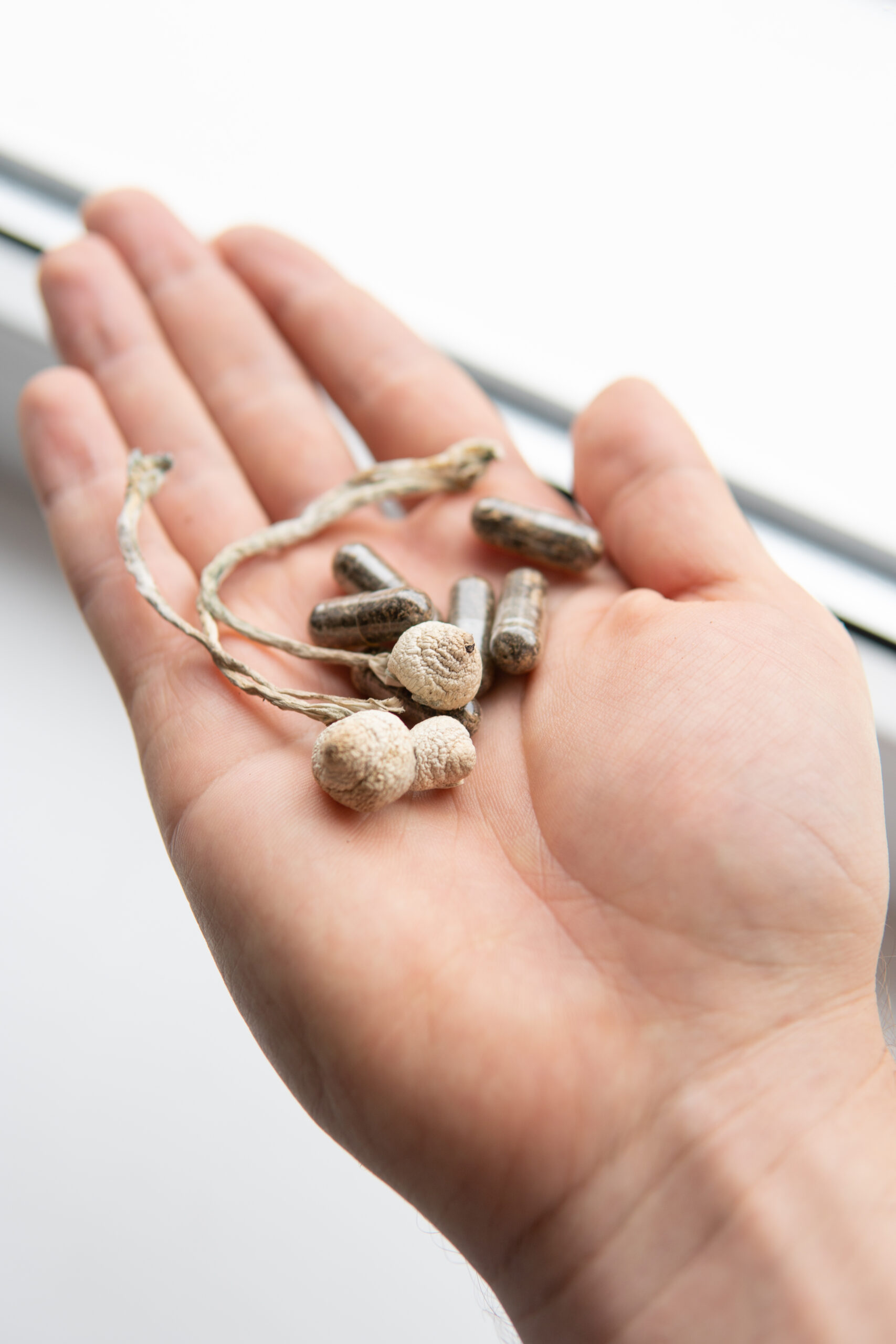
The medicines used — most commonly psilocybin (found in mushrooms), ayahuasca, and MDMA — work by temporarily quieting the brain's default mode network: the part responsible for the rigid self-narrative that maintains depression, anxiety, and trauma patterns. This creates a window of neuroplasticity — an unusual openness in which deeply held beliefs and emotional patterns can shift.
The key word is structure. Without careful preparation and integration, that window closes without leaving lasting change. With it, the research is striking.
What the research on
psychedelic-assisted therapy shows
Over 1,000 peer-reviewed studies on psychedelic-assisted therapy have been published in the last decade. Major universities — Johns Hopkins, Imperial College London, NYU — have dedicated research centres. The findings are consistent enough that Australia legalised psilocybin therapy in 2023, and several European countries are following with regulated frameworks.
This is not fringe science. It is one of the most promising developments in mental health treatment in a generation.
What four years
of guests report.
Most retreat operators don't collect outcome data at all. We do — and we publish it unedited, including the answers we like least. In 2026 we surveyed past guests from four years of psychedelic-assisted therapy retreats, asking about lasting change, not how they felt when they left.
"How has the medicine impacted your life so far?"
78.8% reported moderate or life-changing positive impact. 98.5% reported a positive impact overall.
"Since the retreat, how much clarity or positive change have you noticed in your daily life?"
52.3% noticed quite a lot or a great deal of clarity and positive change in daily life. (n=65 — one respondent left this question blank.)
How we report
69 of roughly 800 alumni responded — surveys like this always reflect the guests who choose to answer, so we state that plainly rather than dress it up. One guest reported a negative impact: the only one across four years of responses, and a guest who had not taken the integration call included in their retreat. Their own advice to future guests was to make sure the integration happens. We agree — it's why integration is built into every programme. We publish the number because you deserve the whole picture.
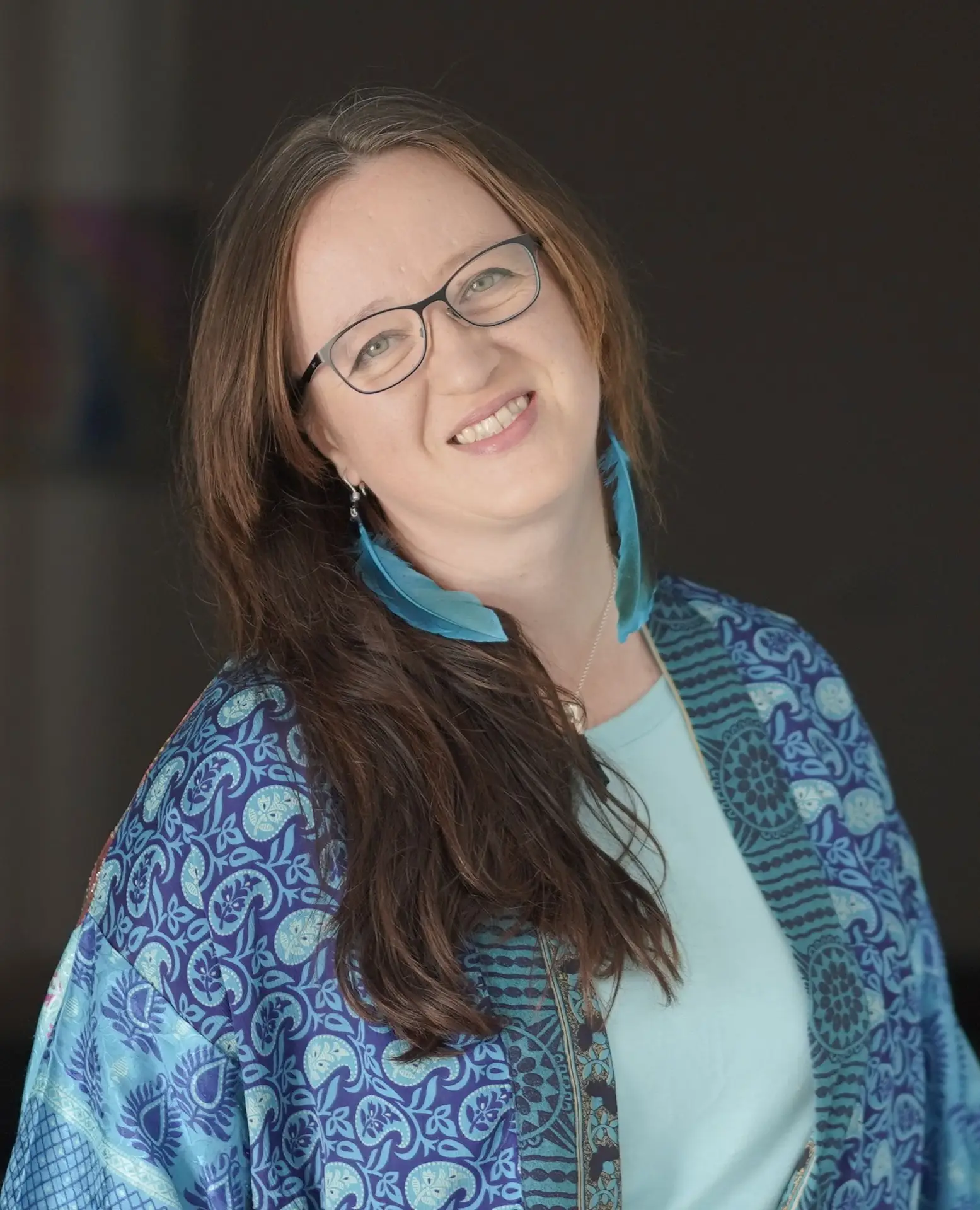
Bianca · Founder & Lead Facilitator
I built this
because I needed it.
Twenty years as an ERP consultant taught me how to look like a case study in competence while running on cortisol and insomnia. I spent €38,000 and years of my life on everything conventional care had to offer — and nothing lasted, because nobody asked the one question that mattered: is your nervous system actually capable of holding change right now?
That question became the BioPsyche Renewal Protocol. This retreat exists because the container I needed didn't exist anywhere.
"I was functioning. I was meeting deadlines, raising children, holding conversations. But I could look at a sunset and remember that there used to be a time when I would feel something, but now there was nothing positve."
Read the full story →The 5-Day
Flexible Retreat
Our flagship programme. Small groups — maximum 8 people — held in the Algarve, Portugal (sometimes Spain and the Netherlands). You choose which medicines feel right for you: ayahuasca, psilocybin, San Pedro, or non-medicine work. Everything by consent. Real individual care throughout.
This is not a ceremony with a check-in and check-out. It is a structured therapeutic container — with preparation before, integration woven through every day, and professional follow-up after you leave.
See Full Details →Prepare
Medical screening, dietary preparation, and intention-setting calls. We assess whether you're ready — not just willing. Sometimes we say not yet. That honesty is part of the care.
The Retreat
Daily ceremonies, sharing circles, one-to-one sessions, and integration woven through every day — not bolted on at the end. Held by a team of four trauma-informed, multilingual facilitators.
Integrate
Integration calls, our AI-supported app, and a community that doesn't disappear when you go home. This is where most people either gain ground — or lose what they found. We stay.
For those who want a deeper journey: the full BioPsyche Renewal Protocol wraps everything in a longer therapeutic arc — biological stabilisation first, the retreat, then embodiment support - a six months arc.
Learn about BPR →800 people.
One consistent truth.
"Those days were the toughest, most profoundly healing, darkest, and yet most luminous and victorious experience of my life so far. I always felt embraced, understood, and gently guided. Their love, patience, devotion and honesty are present in every corner."
"I arrived very lost, with little to my name, and spent the last of my savings. It turned out to be one of the most important decisions of my life. During those ceremonies, I reconnected with my inner child and became his parent."
"I arrived apprehensive. The whole team made me feel welcomed and loved. It's the integration sessions and sharing circles — truly being heard by others on the same journey — that stayed with me most."
"Bianca — her professionalism, integrity and support before, throughout and after — is above all a lovely human being full of acceptance and understanding. You feel relaxed like you are around family from the very first moment."
Your questions,
answered.
In this Q&A, Bianca addresses the questions she hears most often — from people who are curious but cautious, who have done their research but still aren't sure.
If you have a question that isn't covered, the discovery call is the right place to bring it. No question is too basic. No concern is too small. This is your first step towards your Psychedelic-Assisted Therapy Retreat in Europe.
Book a Call →A conversation
worth having.
The discovery call is not a sales call. It is a structured 45-minute conversation in which we map where you are, what has and hasn't worked, and whether any of what we offer makes sense for you right now.
You will leave with a clearer picture of your own patterns — regardless of whether you ever book a retreat. Many people tell us the call alone shifted something. That is by design.
If you go on to join a retreat, the call fee is fully deducted from the retreat price.
What you get
- A structured 45-minute 1:1 conversation with Bianca
- Clarity on your specific situation — what's keeping you stuck and why
- An honest assessment of whether retreat work is right for you right now
- A personal recommendation — even if that recommendation is something else entirely
- A framework you can use immediately, whatever you decide
45-60 minutes · Fully deductible · No obligation
Book Your Discovery Call